Navratri Puja — Kalash Sthapana, Durga Saptashati & Kanya Puja | Sharad Navratri 2026
Complete Vedic Ceremony with Traditional Rituals
⭐ Sharad Navratri 2026: 11 Oct – 19 Oct 2026 | Ghatasthapana Muhurat: 06:19 AM – 10:12 AM on 11 Oct — Book Now!
+91 95807 58639नवरातà¥à¤°à¤¿ का महतà¥à¤µ — Significance of Navratri Puja
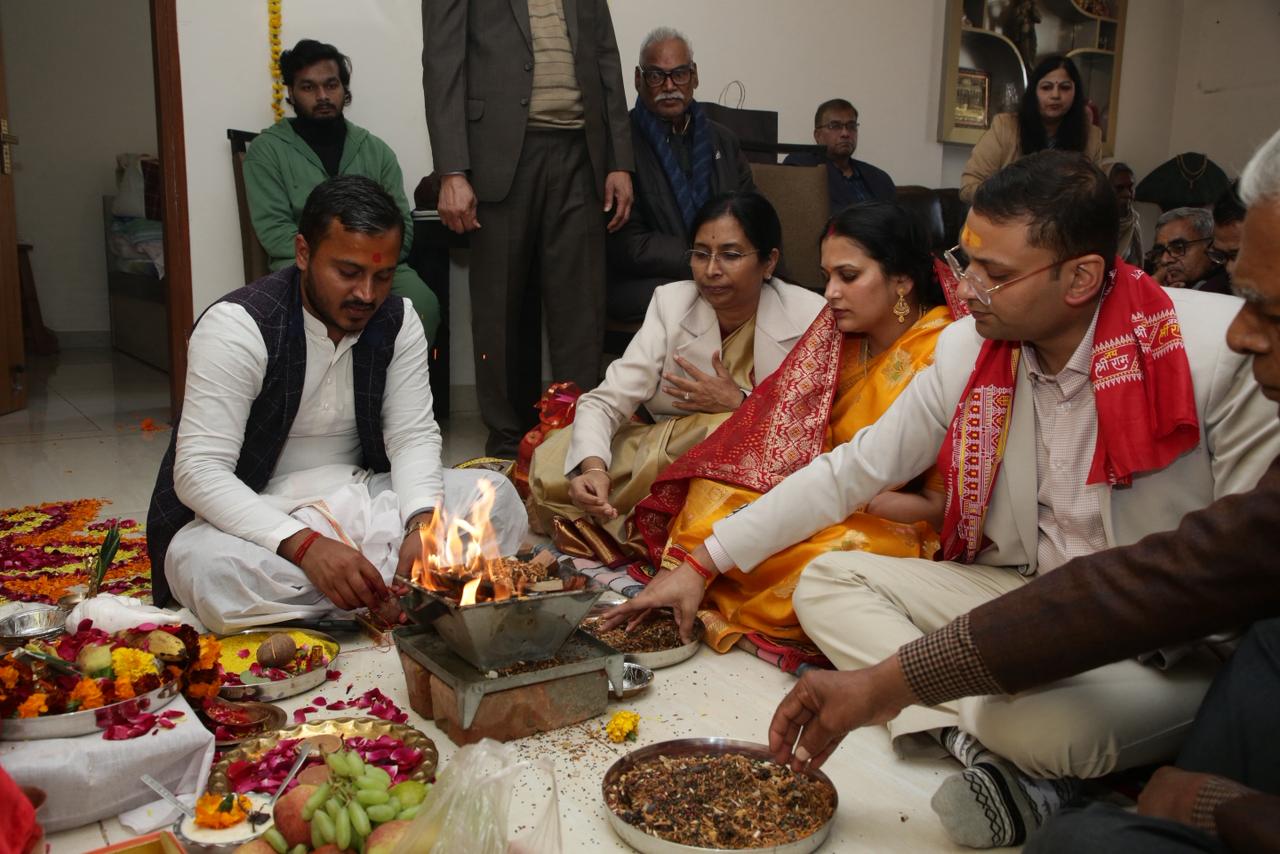
Navratri — meaning "nine nights" — is the most widely celebrated Hindu festival dedicated to Goddess Durga and her nine divine manifestations (Navadurga). Sharad Navratri 2026 begins on 11 October 2026. The festival represents the triumph of Shakti (divine feminine power) over the demon Mahishasura — the eternal victory of good over evil. Each of the nine days is dedicated to a specific form of the Goddess: Shailaputri, Brahmacharini, Chandraghanta, Kushmanda, Skandamata, Katyayani, Kalaratri, Mahagauri, and Siddhidatri. Worshipping these nine forms with Ghatasthapana, Durga Saptashati Path (Chandi Path), Havan, and Kanya Puja is considered supremely auspicious and grants health, prosperity, protection, and divine blessings. Pandit Sandesh Tiwari performs authentic Navratri Puja at your home across Lucknow, Delhi, Noida, Gurgaon, Faridabad, and Ghaziabad. Book: +91 95807 58639 | poojapandits.com/services/navratri-puja
Key Spiritual Aspects:
- â Sharad Navratri 2026: 11 October (Ghatasthapana) to 19 October 2026 (Maha Navami)
- Celebration of Divine Feminine Shakti in nine sacred forms (Navadurga)
- Represents the eternal victory of Goddess Durga over Mahishasura (good over evil)
- Ghatasthapana Shubh Muhurat: 06:19 AM – 10:12 AM on 11 October 2026
- Durga Saptashati Path (700 sacred verses), Havan, and Kanya Puja are the core rituals
- Most powerful period for spiritual awakening, wish fulfillment, and divine blessings
Spiritual and Practical Benefits of Navratri Puja
- •Direct connection with Divine Mother's grace and Shakti energy
- •Purification of mind, body, and soul through nine days of devotion
- •Awakening of inner Shakti (divine feminine energy) within the devotee
- •Protection from negative energies, evil eye (nazar dosha), and dark forces
- •Accelerated spiritual growth, self-realization, and inner peace
- •Removal of sins, karmic debts, and ancestral curses (Pitru Dosha)
- •Fulfillment of specific wishes through Durga Saptashati with Samput
- •Fulfillment of desires — wealth, good health, marriage, children, career success
- •Prosperity and abundance in business and household
- •Success in education, competitive exams, and career promotions
- •Good health and vitality — chronic ailments resolved through dedicated worship
- •Harmonious relationships and removal of family conflicts
- •Mental clarity, confidence, and emotional strength
- •Protection of home and family from accidents and misfortunes
Sharad Navratri 2026 — Dates, Ghatasthapana Muhurat & Full Schedule
Sharad Navratri 2026 begins on Sunday, 11 October 2026 (Pratipada — Day of Shailaputri) and concludes on Sunday, 19 October 2026 (Maha Navami). Vijayadashami (Dussehra) falls on 20 October 2026. The most important ritual — Ghatasthapana (Kalash Sthapana) — MUST be performed during the Shubh Muhurat on Day 1. Missing the muhurat weakens the entire ritual. Book Pandit Sandesh Tiwari in advance for Kalash Sthapana at the correct muhurat. Call/WhatsApp: +91 95807 58639.
नव दुर्गा — 9 Forms of Goddess Durga | Navratri 2026
| Day / Date | Devi Form | Auspicious Color |
|---|---|---|
| Day 1 11 Oct 2026 | Shailaputri Daughter of the Himalayas | Royal Blue |
| Day 2 12 Oct 2026 | Brahmacharini The one who observes austerity | Yellow |
| Day 3 13 Oct 2026 | Chandraghanta The one with a crescent moon bell | Green |
| Day 4 14 Oct 2026 | Kushmanda Creator of the universe (cosmic egg) | Grey |
| Day 5 15 Oct 2026 | Skandamata Mother of Lord Skanda (Kartikeya) | Orange |
| Day 6 16 Oct 2026 | Katyayani Born in the ashram of Sage Katyana | White |
| Day 7 17 Oct 2026 | Kalaratri Destroyer of darkness and evil | Red |
| Day 8 18 Oct 2026 | Mahagauri The supremely fair and pure Goddess | Sky Blue |
| Day 9 19 Oct 2026 | Siddhidatri Bestower of all supernatural siddhis | Pink |
📍 Book Pandit for Navratri Kalash Sthapana at home — +91 95807 58639 | poojapandits.com/services/navratri-puja
Complete Navratri Puja Vidhi — Step-by-Step
Ghatasthapana / Kalash Sthapana (Day 1 — 11 Oct 2026)
The most important ritual of Navratri. A sacred Kalash (copper/silver pot) filled with holy water, mango leaves, coconut, and red cloth is established during the Shubh Muhurat (Primary: 06:19–10:12 AM; Abhijit: 11:44 AM–12:31 PM on 11 Oct 2026). Barley seeds (jau) are sown in a clay pot alongside it. This Kalash represents the living divine presence of Goddess Durga for the 9 days. Pandit Ji performs with complete Vedic Sankalp, mantras, and invocation.
Durga Saptashati Path / Chandi Path
The 700 sacred verses of Durga Saptashati (from Markandeya Purana) are recited over 9 days. Pandit Sandesh Tiwari performs the complete path with Samput (for your specific desire — wealth, health, child, protection from enemies), Nyasa, Kavach, Argala, and Keelak. This is the most powerful Vedic scripture to invoke the full power of Goddess Shakti.
Daily Navadurga Puja (Days 1 to 9)
Each day, the specific Navadurga form is worshipped with her auspicious color, dedicated mantra, and bhog (special food offering). Flowers, incense, dhoop, deepak (lamp), and naivedya are offered daily. Durga Chalisa and Aarti (Jai Ambe Gauri) are performed twice — morning and evening.
Akhand Jyot — Continuous Sacred Flame (Optional but Highly Auspicious)
An unbroken flame (diya) is kept burning for all 9 days — symbolizing the eternal presence of Goddess Durga. Key rules: Use pure cow ghee or sesame oil; always keep a family member present; protect from wind; never let it extinguish; do not blow it out — gently add oil as needed. Pandit Ji provides complete guidance on setup and precautions.
Havan / Navchandi Yagna (Durga Ashtami — 18 Oct 2026)
A grand Navchandi Havan or Durga Havan is performed on Ashtami (18 Oct) or Navami (19 Oct 2026). 108 or 1008 offerings (ahutis) of ghee, sesame, barley, and specific medicinal herbs are made to the sacred fire with Vedic mantras. This purifies the home environment, drives away all negativity, and invokes powerful divine blessings for the entire family.
Kanya Puja — Worship of 9 Young Girls (Ashtami 18 Oct / Navami 19 Oct 2026)
Young girls aged 2–10 are worshipped as living manifestations of the nine Navadurga. Their feet are washed with holy water, they are adorned with red chunri (dupatta), applied kumkum tilak, and offered prasad of halwa, puri, and chana. Each girl is given a red chunri and dakshina. Minimum 2, ideally 9 kanya. This is the most spiritually meritorious act of Navratri.
Kalash Visarjan (Vijayadashami — 20 Oct 2026)
On Dussehra (10th day), the Kalash is ceremonially bid farewell. The barley sprouts (jau ke ankur) that grew during the 9 days are distributed as prasad — placed on foreheads and in hair as a symbol of divine blessings and coming prosperity for the whole family.
Daily Aarti — Jai Ambe Gauri (Morning and Evening)
Morning and evening aarti is performed daily with all family members. The famous Durga Aarti (Jai Ambe Gauri), Jai Mata Di, and Maa Vaishno Devi bhajans are sung with full devotion, accompanied by ringing bells and conch blowing.
Estimated Duration: 9 consecutive days — Kalash Sthapana: 1 hour | Daily Puja: 45–60 min | Havan: 2–3 hours | Kanya Puja: 1 hour
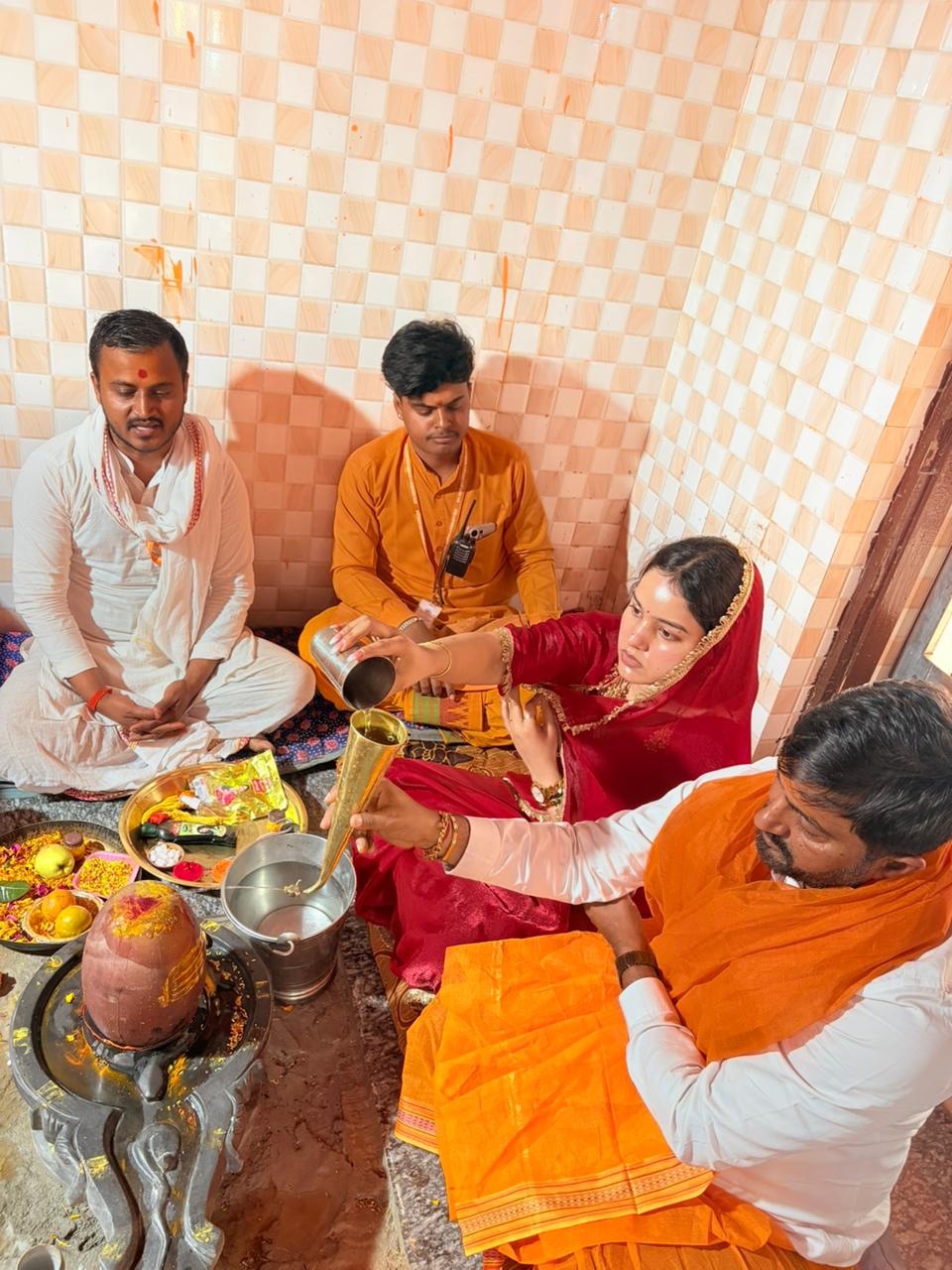
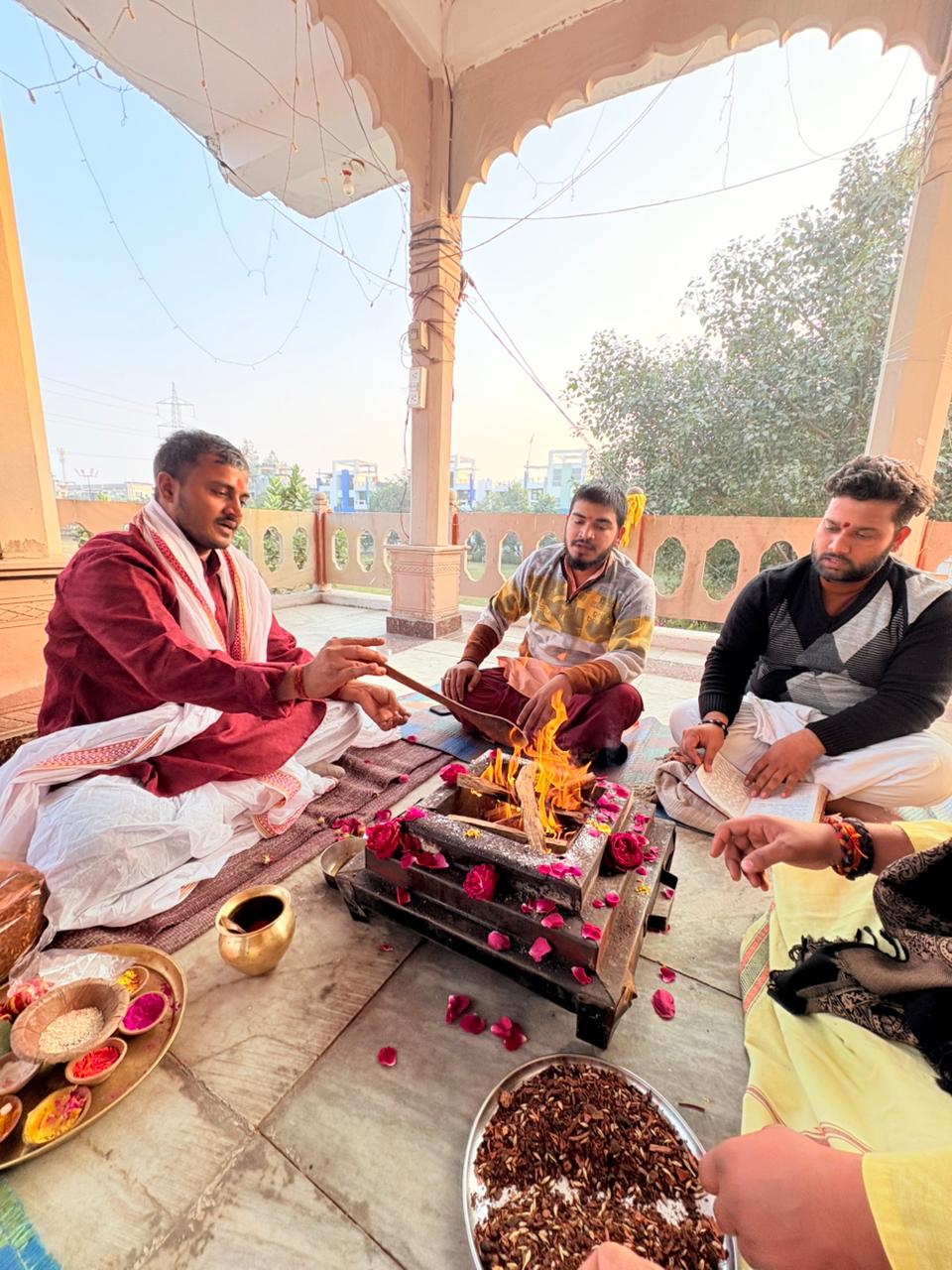
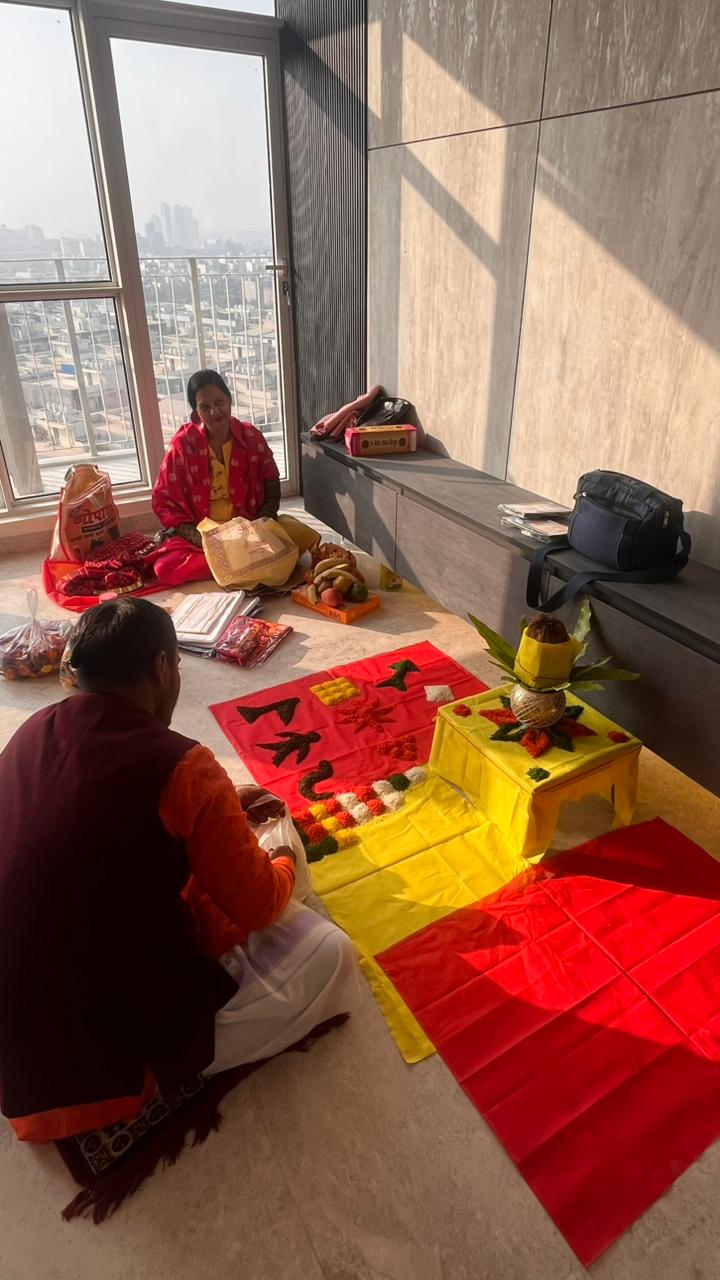
Photo Gallery
Important Guidelines for Navratri Puja 2026
- â Sharad Navratri 2026: 11 October to 19 October — Book Pandit Ji NOW for Ghatasthapana on 11 Oct 2026 (Shubh Muhurat: 06:19 AM – 10:12 AM)
- Ghatasthapana (Kalash Sthapana) MUST be performed during the Shubh Muhurat — missing the muhurat weakens the 9-day ritual
- Complete 9-day puja package OR single-day Ghatasthapana + Durga Saptashati Path available
- Durga Saptashati recited with Samput for specific desires: wealth, health, child boon, removal of enemies
- Maintain Brahmacharya; strictly avoid non-vegetarian food, onion, garlic, and alcohol for all 9 days
- Fasting options: Nirjala (no water), Phalahar (fruits/milk only), Ek-bhukt (one sattvic meal) — choose as per your capacity
- Wear the Navadurga's auspicious color each day (Royal Blue, Yellow, Green, Grey, Orange, White, Red, Sky Blue, Pink)
- Kanya Puja is mandatory — worship minimum 2, ideally 9 young girls aged 2–10 on Ashtami (18 Oct) or Navami (19 Oct)
- Akhand Jyot: Never let the flame extinguish — always keep a family member on duty at all times
- Do not cut hair, trim nails, or shave during any of the nine days of Navratri
- All samagri, Durga Saptashati book, and Kanya Puja items provided by Pandit Ji on request
- Serving Lucknow, Delhi, Noida, Gurgaon, Faridabad, Ghaziabad — Call/WhatsApp: +91 95807 58639
Frequently Asked Questions
- ✓Kalash with mango leaves, coconut & barley seeds
- ✓Navadurga image / yantra for all 9 days
- ✓Daily puja items for nine days
- ✓Durga Saptashati (Chandi Path) book
- ✓Havan samagri for Ashtami / Navami Havan
- ✓Kanya Puja items — red chunri and prasad